
VoIP phones
The original killer app. Desk phones get power and voice/data from one wall jack.


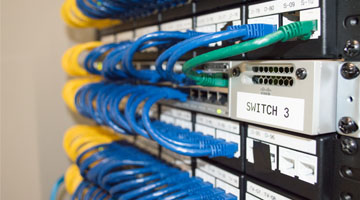
One cable. Power and data. A smarter way to light a building.
Power over Ethernet. PoE - delivers both electrical power and data over a single standard Ethernet cable. One cable, two jobs: it runs your device and connects it to the network at the same time.
It is the same family of technology that already powers IP phones, security cameras, and wireless access points in offices worldwide. Applied to lighting, it turns LED fixtures into intelligent, networked devices you can dim, schedule, zone, and measure.
Because PoE carries safe, low-voltage DC power, there is no need for separate high-voltage electrical wiring to each fixture, and no conduit or AC drivers to install and maintain at every light.
 One cable
 Low-voltage DC
 Network control
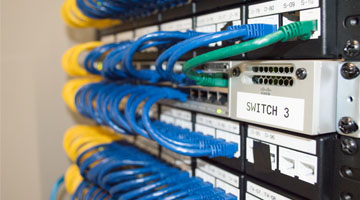
PoE started as a way to power phones on the network. Each jump in wattage unlocked new devices, until commercial lighting could ride the same cable plant.
If a device needs a network connection and a modest amount of DC power, PoE is often the cleanest way to feed it. Lighting is the exciting chapter for buildings, but it is part of a much bigger story.
The original killer app. Desk phones get power and voice/data from one wall jack.

Fixed and PTZ cameras mount where the view is best, not where an outlet happens to be.

WAPs hang from ceilings and closets with a single Ethernet drop for power and backhaul.

GENISYS fixtures, IntelliDrives, and related nodes turn the cable plant into a lighting system.

Occupancy, daylight, environmental, and facility sensors join the same low-voltage fabric.

Networked switches and interfaces deliver familiar control without line voltage behind the plate.

Higher-power PoE standards can feed displays, wayfinding, and interactive kiosks.

Motorized shades, access control, alarms, and other digital-building loads increasingly ride Ethernet power.
PoE does not just replace an AC whip. It changes what lighting can do once every fixture is a connected node.
A single Ethernet run carries power and data to fixtures, switches, and sensors. That means faster, safer installs and easier reconfiguration when the floor plan changes.
Every PoE fixture can be dimmed, tuned, scheduled, grouped into zones, and driven by sensors from centralized software.
Centralized DC conversion and networked reporting help you use less energy and prove it with real data.
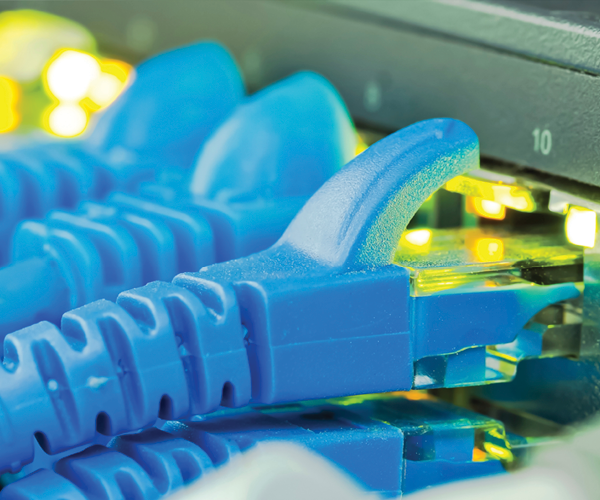
GENISYS follows the same PoE idea buildings already trust, then extends it through IntelliDrive hubs to fixtures, sensors, and wall controls.
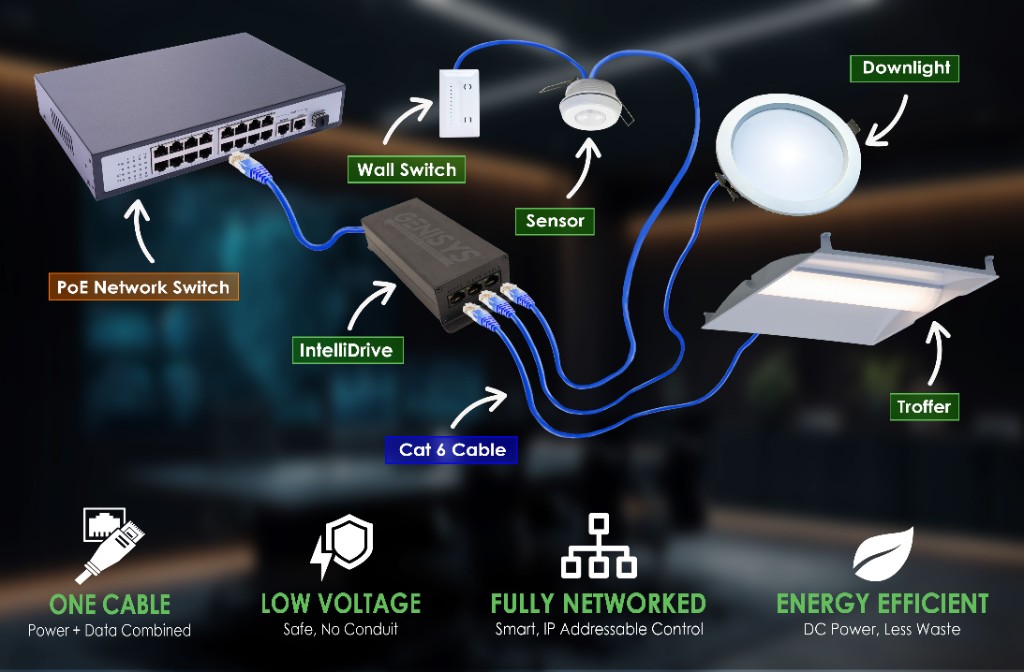
Converts and sends low-voltage power with data over Ethernet.

Turns one UPoE port into power and control for multiple devices.
Fixtures, sensors, and wall switches become the living edge of the system.
Power, data, fixtures, sensors, and controls share the same RJ45 language.
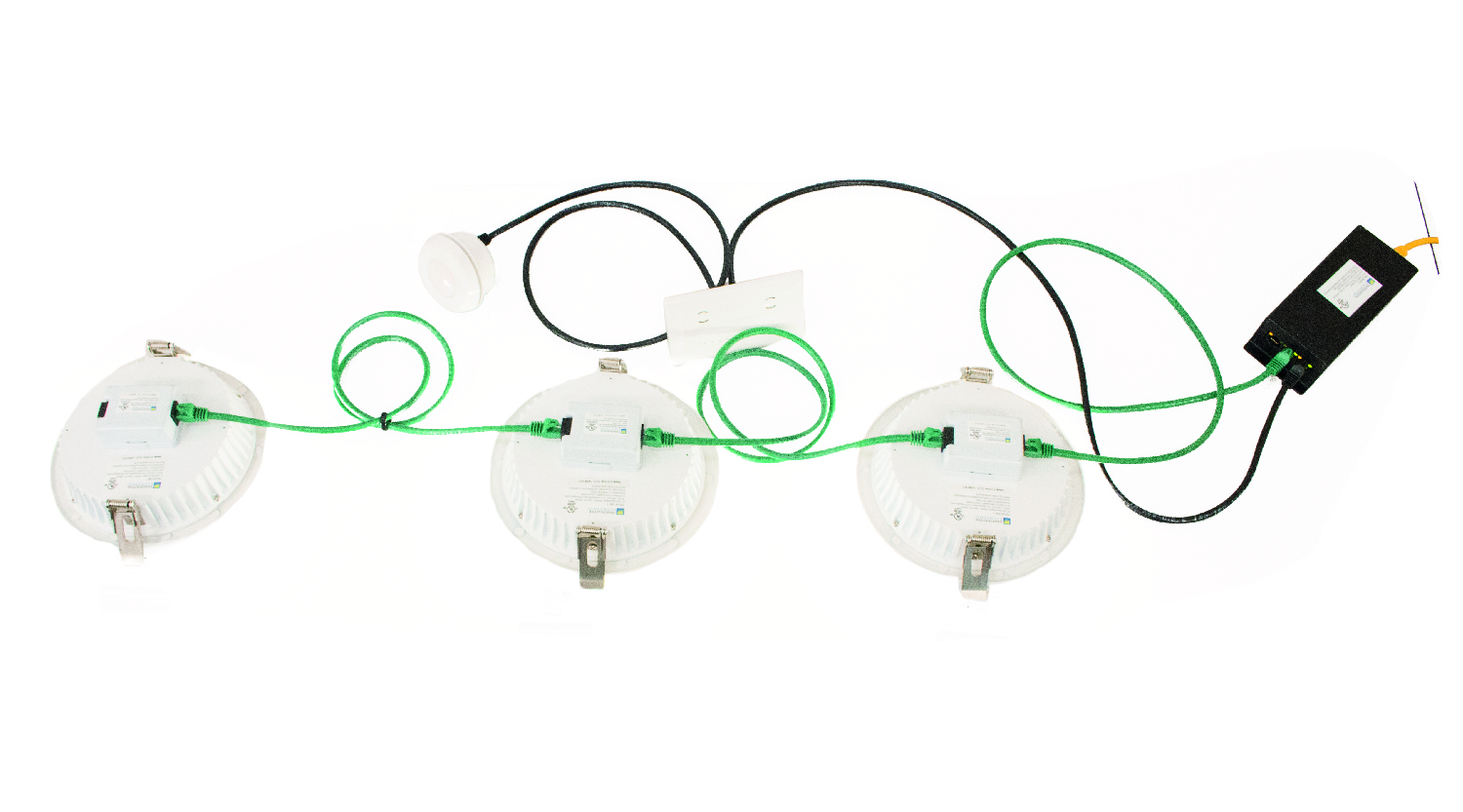
Follow power and data from the switch to software.
Learn moreThe hub that makes PoE lighting expandable and practical.
Learn moreSafety, codes, third-party fixtures, and integration answers.
Learn moreSee PoE lighting working in offices, plants, retail, and civic buildings.
Learn moreLet’s talk through the possibilities for your space.