
Inside one of its classrooms, Royal Oak, MI-based Judson Center - a non-profit human services agency that provides compassionate, comprehensive services to children and families throughout southeast Michigan - provides therapy and autism treatment for clients ages two through seven. Spending 30 hours or more inside the all-purpose room each week, children use the space to eat, nap, work toward therapy goals, and learn.
At any given time, between 10 and 12 people use the small room. Those tight quarters - combined with bright, buzzing fluorescent lights - made it difficult for clients to nap and concentrate on activities. “With our outdated lighting system, we were stuck with the lights either on or off,” says Jennifer Radowick, board certified behavioral analyst at Judson Center. “We didn’t have the ability to dim them or make them less harsh for clients who are toddler age and fell asleep while others were trying to work. No one wants bright lights when they take a nap.”
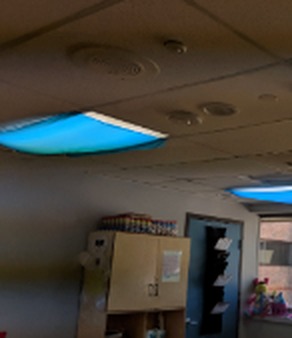
Staff even draped blue tablecloths and tissue under fluorescent fixtures for a temporary calming effect. “For children with autism, lighting is typically an issue,” says Frankie Groce, director of autism services at Judson Center. “Oftentimes, fluorescent lights give off noise that other people may not hear, but kids with autism do. That can also be a trigger for anxiety or behavior issues. Having to be in the room for nine hours a day can be quite taxing on the ears. What we had wasn’t working.”